
The Hidden Stress of Constant Notifications: How Digital Alerts Affect Anxiety, Focus, and Mental Well-Being
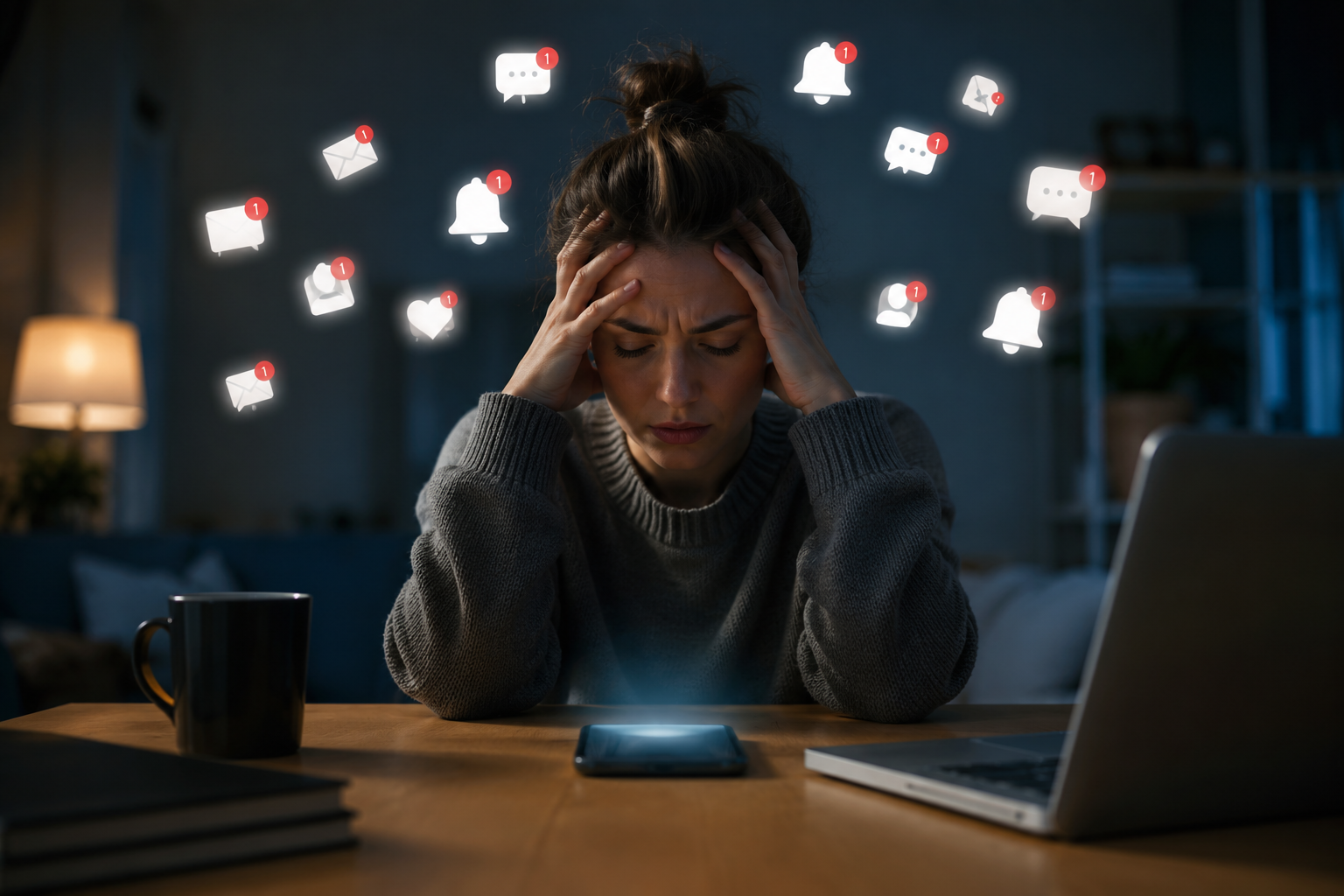
In the modern world, notifications have become an almost invisible part of daily life. Smartphones, tablets, smartwatches, laptops, and even household devices compete for our attention through a constant stream of alerts. Messages, emails, social media updates, news headlines, calendar reminders, shopping promotions, and app notifications arrive throughout the day, often interrupting whatever we are doing. While these alerts are designed to keep us informed and connected, their cumulative effect on mental health is increasingly becoming a topic of concern.
Many people assume that a brief notification takes only a second to process. However, the psychological impact extends far beyond the momentary glance at a screen. Constant interruptions can contribute to elevated stress levels, increased anxiety, reduced concentration, and a growing sense of mental exhaustion. What appears to be a harmless digital convenience may, over time, reshape how the brain manages attention and responds to uncertainty.
Why Notifications Capture Our Attention So Effectively
Human brains are naturally wired to respond to new information. Throughout evolution, paying attention to unexpected signals often provided survival advantages. A sudden sound, movement, or environmental change could indicate an opportunity or a threat. Modern notifications exploit this same neurological mechanism.
Every alert introduces an element of uncertainty. The brain immediately asks questions: Who sent the message? Is it important? Does it require action? Could it contain good news or bad news? This anticipation triggers a release of dopamine, a neurotransmitter associated with reward and motivation. As a result, checking notifications can become a habitual behavior that feels difficult to resist.
The challenge is that most notifications are not urgent. Yet the brain often reacts to them as though they might be. This repeated cycle of anticipation and interruption can create a state of continuous low-level vigilance, making it difficult to fully relax or concentrate.
The Connection Between Notifications and Anxiety
One of the most significant psychological effects of constant notifications is their relationship with anxiety. Every incoming alert represents a potential demand on attention, time, or emotional energy. Even when people choose not to immediately respond, simply knowing that notifications are waiting can create mental tension.
Many individuals experience a phenomenon known as anticipatory stress. They become accustomed to expecting new messages, updates, or requests at any moment. This expectation keeps part of the mind engaged with future possibilities rather than the present task.
Social media notifications can intensify this effect. Alerts about likes, comments, messages, or mentions encourage users to seek validation and monitor social interactions continuously. Over time, this can contribute to heightened sensitivity regarding social approval and increase feelings of anxiety when engagement is lower than expected.
Work-related notifications create another layer of pressure. Emails arriving after business hours, instant messaging platforms, and collaboration tools can blur the boundaries between professional and personal life. Employees may feel obligated to remain constantly available, preventing the mental recovery that traditionally occurred outside working hours.
How Interruptions Damage Concentration
Concentration requires sustained attention. When people become deeply engaged in a task, they enter a state often described as “flow,” where focus is intense and productivity increases. Notifications disrupt this process repeatedly.
Research into attention has shown that even brief interruptions can have lasting consequences. When a notification appears, the brain shifts attention away from the primary activity. Although the interruption itself may last only a few seconds, the cognitive recovery period can be significantly longer.
After checking a message or alert, individuals often need several minutes to fully regain their previous level of concentration. If notifications occur frequently throughout the day, the brain spends much of its time transitioning between tasks rather than engaging deeply with any single one.
This pattern contributes to fragmented thinking. Rather than completing activities efficiently, people may feel busy while accomplishing less. The result is often frustration, reduced productivity, and increased mental fatigue.
The Rise of Mental Overload
The human brain has limited cognitive resources. Every notification consumes a portion of those resources, regardless of whether it is opened immediately. Unread messages, pending emails, and app alerts create what psychologists sometimes refer to as cognitive clutter.
This clutter occupies mental space because the brain continues tracking unresolved information. Even when notifications are ignored, they can generate a subtle background awareness that competes with other thoughts.
Over time, constant exposure to digital alerts may contribute to mental overload. Individuals often report feeling overwhelmed despite not facing a single major stressor. Instead, the accumulation of hundreds of small interruptions creates a persistent sense of pressure.
Mental overload can manifest through symptoms such as irritability, difficulty concentrating, forgetfulness, reduced motivation, and emotional exhaustion. These effects are often attributed to busy lifestyles, but notification-related interruptions may play a significant role.
Sleep Disruption and Recovery
Notifications do not only affect waking hours. Many people keep smartphones within reach during the night, allowing alerts to interrupt sleep directly or indirectly. Even when notifications do not fully wake a person, sounds, vibrations, or illuminated screens can disturb sleep quality.
Poor sleep has well-documented consequences for mental health. It increases stress sensitivity, impairs emotional regulation, and reduces cognitive performance. Individuals who frequently check notifications before bedtime may also experience difficulty falling asleep because digital engagement keeps the mind active and alert.
The combination of daytime interruptions and nighttime disturbances can create a cycle in which mental recovery becomes increasingly difficult.
Reclaiming Attention in a Notification-Driven World
Managing notifications does not require abandoning technology altogether. Instead, it involves creating intentional boundaries around digital communication.
Many people find benefits in disabling non-essential notifications and limiting alerts to genuinely important contacts or applications. Scheduling designated times for checking messages rather than responding continuously throughout the day can reduce interruptions while maintaining connectivity.
Creating notification-free periods may also help restore deeper concentration. During focused work sessions, exercise, meals, family time, or relaxation, minimizing digital interruptions allows the brain to engage more fully with the present moment.
Some individuals choose to establish technology-free zones within the home, particularly in bedrooms, to protect sleep quality and encourage mental recovery.
Conclusion
Notifications were designed to make communication more efficient, but their constant presence can come at a significant psychological cost. By repeatedly interrupting attention, triggering anticipatory stress, and encouraging continuous engagement, digital alerts influence both anxiety levels and cognitive performance. The effects are often subtle, accumulating gradually over time until individuals begin to feel distracted, overwhelmed, or mentally exhausted.
Understanding the hidden impact of notifications is the first step toward developing healthier digital habits. As technology continues to become more integrated into daily life, learning to manage attention intentionally may become one of the most important skills for protecting mental well-being, maintaining focus, and reducing unnecessary stress in an increasingly connected world.
- Advertisement -